You must have regular cleaning based upon risk factors, operational volume, food allergen presence, and health inspections, plus verification documentation demonstrating food safety protocols, inspection results, and government health requirements. The following sections describe critical cleaning system elements.
Important Highlights
- Sanitation specialists in Brampton support restaurants, grocery departments, commissaries, warehouses, bakeries, schools, mobile vendors, and allergen-sensitive operations.
- They sanitize frequently contacted areas, food-contact equipment, kitchens, floors, drains, restrooms, and storage areas using sectional methods to avoid cross-contamination.
- Qualified providers verify proper chemical concentration, appropriateness, and exposure duration, then log conclusion with swabs, assessments, and correction logs.
- Regular, regular, and periodic operations distributed by zone form cleaning calendars founded on risk, output capacity, changeovers, accidents, and guidelines.
- Choose contractors with HACCP, public-health, knowledge, WHMIS, training, insurance, testimonials, color-categorized tools, and assessment-ready hygiene documentation.
Food Safety Cleaning Requirements for Brampton Establishments
Food safety cleaning is mandatory for any Brampton facility that processes, stores, prepares, packages, or serves food. Apply it to your establishment if it comes under public health review, food regulations, or HACCP protocols. This includes food service venues, employee dining, supply facilities, retail sections, butcheries, seafood counters, retail shops, and facility kitchens.
Documented food safety measures continues to be needed in supply warehouses, processing plants, freezer locations, commercial bakeries, school food programs, reception facilities, and food delivery centers. Portable temporary ventures matter as well, like mobile kitchens, market vendors, and seasonal booths. Your location needs established hygiene documentation if your workers prepare supplies, portion finished foods, reheat dishes, or organize allergen inventory. In Brampton, cleanliness stays discretionary; it constitutes statutory, functional, and public health adherence.
What Do Brampton Cleaning Experts Clean?
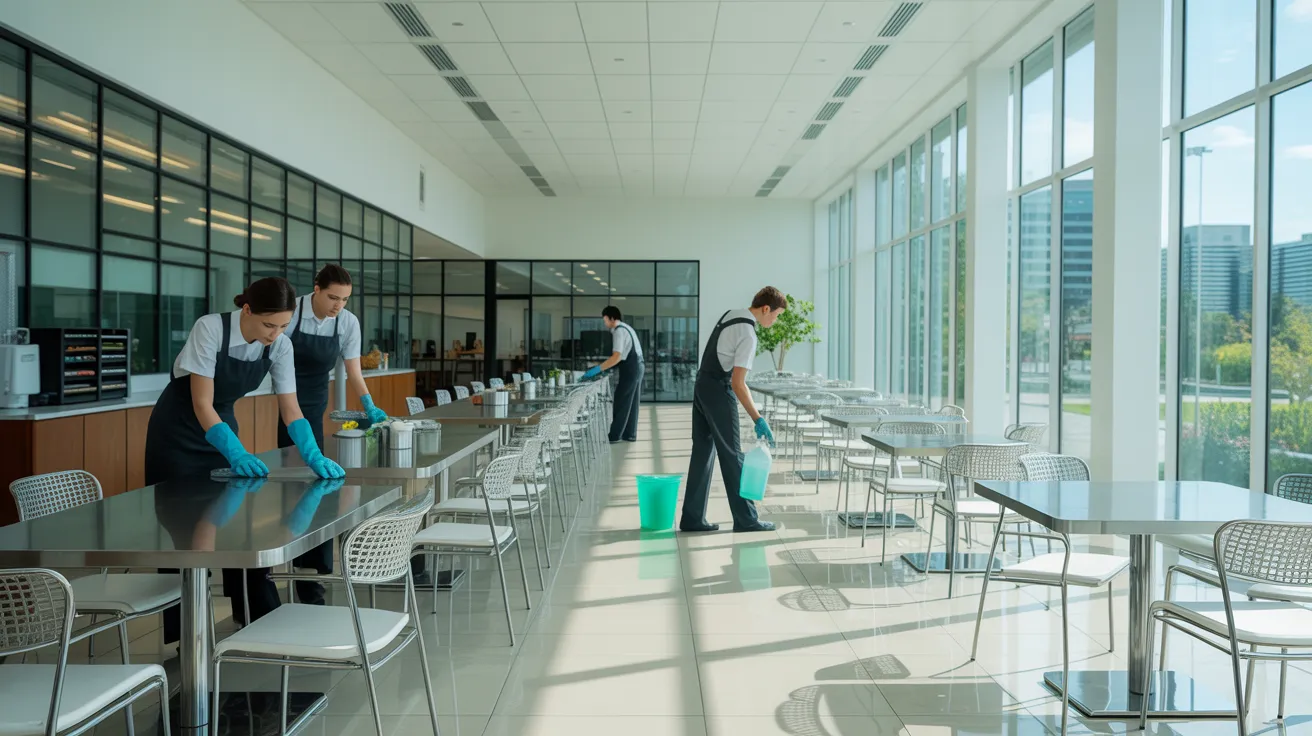
You require experienced cleaning professionals who sanitize frequently touched areas, kitchen spaces, floor areas, and bathrooms to maintain food safety and public health requirements. These areas are targeted due to their high cross-contamination potential, slip and fall dangers, and regulatory breaches.
If you grasp what they sanitize, you'll be able to confirm your operation satisfies all operational and regulatory compliance needs.
Key High-Touch Surface Cleaning
establish how frequently each surface is disinfected
By rotating cloths, implementing one-way workflows, and dividing cleaning supplies by zone, you keep a measurable, well-documented, and ready for inspection cleaning protocol.
Cooking Zones, Walking Surfaces, and Restroom Environments
Brampton cleaning services focus on kitchens, floors, and restrooms as each zone presents different sanitation, accident, and wellness concerns. In industrial kitchens, you need degreasing on cook lines, equipment exteriors, drains, prep surfaces, and splash zones to minimize contamination and pest pressure.
Documented floor care is likewise provided as part of the service.
In restrooms, cleaners treat contact surfaces, bathroom hardware, partition walls, accessory dispensers, and receptacles then refill supplies and eliminate odor. They also service restaurant moprooms, where chemical storage, sink hygiene, and drainage conditions can affect sanitation compliance and staff safety daily.
How Food Safety Cleaning Benefits Brampton Operations
In Brampton, you must maintain sanitary cleaning practices to satisfy regulatory standards and pass inspections. You also reduce bacterial spread through proper cleaning of food-preparation surfaces, appliances, and frequently-touched items. Most importantly, you safeguard public health by lowering the risk of foodborne illness in your facility.
Sanitary Standards Adherence
Food companies in Brampton face rigorous sanitary regulations, making food safety cleaning crucial to satisfying health code requirements, ensuring the safety of patrons, and avoiding enforcement action. You must maintain hygienic food handling zones, verifiable cleaning logs, safe chemical management, and traceable training practices that correspond to municipal and provincial inspection expectations.
During inspections of your operation, officials check if your hygiene protocols ensures proper stock preservation, appliance cleanliness, refuse management, and restroom sanitation.
Cross-Contamination Prevention
Adhering to regulatory guidelines requires your skill in preventing cross-contamination throughout daily food handling and cleaning. You need to isolate uncooked items from finished products, sanitize work stations after each task, and keep chemicals away from food-contact items. Organized systems minimize contamination events and ensure consistent compliance during inspections.
Building allergen segregation prevents priority allergens from contacting shared surfaces, containers, or equipment. Utilize dedicated cutting boards, color-coded tools, and precise instrument labeling so team members won't blend products in cooking or serving.Mandate hand cleaning following raw meat, seafood, eggs, or allergen-containing products. Swap wiping cloths regularly, and confirm disinfectant efficacy using test strips. When your team follows these practices each shift, you create a cleaner, safer operation that meets Brampton's food safety expectations daily.
Community Health Safety
When food safety cleaning deteriorate, you don't only risk a failed inspection—you expand the chance of food contamination striking customers, staff, and the larger Brampton community. You also weaken your role in protecting public health, especially in busy food facilities where contamination can spread quickly through surfaces, equipment, and touchpoints.
You need cleaning protocols that remove soils, sanitize correctly, and confirm effectiveness. That means following contact times, using approved disinfectants, recording cleaning times, and training staff to meet health-unit expectations. These controls support disease prevention by lowering microbial loads before they contaminate surfaces or food. In Brampton, strong sanitation protects vulnerable populations, limits outbreak potential, and helps you demonstrate due diligence. When you maintain proper standards, you don't just meet regulations—you actively reduce risk and promote secure food handling citywide.
How Does Cleaning Support Food Safety Compliance?
Rigorous cleaning routines support food safety compliance by decreasing contamination threats, preventing pathogen multiplication, and maintaining your facility's adherence to sanitation requirements under HACCP-based programs and public health regulations. You ensure that product-contact areas stay visibly clean and microbiologically controlled, backing documented preventive controls and inspection readiness.
Comprehensive cleaning moreover reinforces allergen management by eliminating residues that can lead to undeclared allergen exposure. When you pair validated sanitation procedures with compliance training, your staff can implement established protocols, apply approved chemicals correctly, update records correctly, and manage discrepancies ahead of issues intensify. Systematic cleaning facilitates traceability, establishes remedial measures, and exhibits accountability throughout audits. Moreover, it supports you safeguard quality assurance, preserve operational compliance, and lower the risk of enforcement actions, market recalls, complaints, and avoidable public health risks.
Determining When to Plan Commercial Cleaning
Plans for cleaning work most effectively when established based on risk assessment, output volume, and compliance standards instead of just a fixed calendar.
Schedule seasonal deep cleaning during shutdowns, weather-related soil buildup, or pest-pressure periods
Finding Quality Brampton Cleaning Experts: A Guide
Screen providers initially by their food hygiene standards—not budget alone. You need to verify that every company meets CFIA, public health, and HACCP standards for your operation. Demand insurance verification, WHMIS compliance, training records, and management systems. Evaluate technician understanding of contamination dangers, chemical safety, and documented sanitation practices.
Additionally, you need to evaluate service dependability and responsibility. Obtain references from food facilities in Brampton, then review service speed, corrective-action procedures, and communication standards. Verify the company conducts supplier reviews and can deliver compliance-ready records when inspectors or external parties need proof. Verify equipment upkeep, colour-coded tools are applied correctly, and location-specific dangers are identified. A capable service ensures compliance, product quality, and your reputation.
What does a cleaning and sanitation plan consist of?
Create a documented strategy that clarifies every sanitation responsibility, standard, and task prior to production start. You should outline cleaning frequencies, approved chemicals, dilution rates, contact times, tools, and verification methods for each zone, surface, and piece of equipment. Include pre-operational inspections, corrective actions, and employee training requirements.
Your plan should also address contamination prevention controls, waste handling procedures, pest management measures, and written schedules for restrooms, drains, floors, and food-contact areas. Detail how you'll separate raw and ready-to-eat processes, support ingredient tracking, and maintain accurate allergen labeling through validated cleaning between product changes. You should set accountability, keep signed records, and assess results against regulatory standards, HACCP controls, and customer requirements. When gaps appear, update procedures immediately and retrain staff.
Popular Asked Questions
Are sanitation providers offered for overnight shifts in Brampton facilities?
Yes, you can contract sanitation providers to handle overnight shifts in Brampton facilities. You'll manage overnight sanitation around operational windows, access requirements, and staffing levels. Providers generally establish nightshift logistics to prevent disruption, maintain standards, and document finished tasks. You should verify response times, management, access procedures, and disposal methods before service starts.
Can sanitation professionals manage hazardous incidents?
Yes, you can locate Brampton sanitation experts providing spill response services. They manage contamination, evaluate risks, isolate contamination, and initiate rapid cleanup to reduce risk and avoid operational impact. You should verify response rates, credentials, safety protocols, and disposal methods. If your facility must adhere to regulations, pick a provider that documents events, follows procedures, and supports verification.
Can eco-friendly disinfectants be utilized safely on surfaces contacting food?
Definitely, natural disinfectants work safely on surfaces contacting food if you select solutions certified for food use that satisfy regulatory compliant. You must confirm contact times, concentration levels, and rinsing needs before use. Botanical formulations minimize chemical hazards, but you need proof of efficacy against target microorganisms. To ensure residue free surfaces, implement manufacturer instructions exactly and ensure your cleaning agent adheres to applicable food industry sanitation standards.
Do sanitation programs support seasonal shifts?
Certainly, cleaning schedules accommodate seasonal shifts effectively. Modify timing, staffing, chemicals, and confirmation procedures to fit information with seasonal workflows while upholding regulatory requirements. Reduce production downtime via planning disinfection alongside equipment transitions, maximum output, and equipment use patterns. Further update procedural documents, instruction programs, and environmental monitoring to account periodic risks, emerging allergens, or increased soil loads. Regular reviews keep your program effective.
Do professional cleaning services educate employees on hygiene standards?
Indeed, professional cleaners typically provide employee coaching on proper hygiene. Your team obtains instruction on safe chemical application, contact times, preventing cross-contamination, equipment disassembly, and record-keeping. They typically follow training with HACCP, GMP, and CFIA or regional health standards requirements. Many perform sanitation audits to verify compliance, identify gaps, and strengthen improvement measures. This supports you in establish reliable processes, pass inspections, and reduce food safety risks each day.
Conclusion
Partnering with Brampton commercial cleaning and food safety professionals means more than cleaning—it ensures your facility stays inspection-compliant and your standards are defensible. From processing facilities to kitchens, each sanitized surface and maintained corner lessens contamination risk and prevents major expenses. By arranging service at suitable frequencies and implementing a thorough cleaning program, you protect your workforce, clients, and your reputation. In a heavily regulated sector, sanitary conditions are non-negotiable—they're vital to proper management.